
Published
Why do tenant submeters differ from the building meter?
Compare energy over matching dates, account for landlord services and check the meter hierarchy before interpreting a difference.
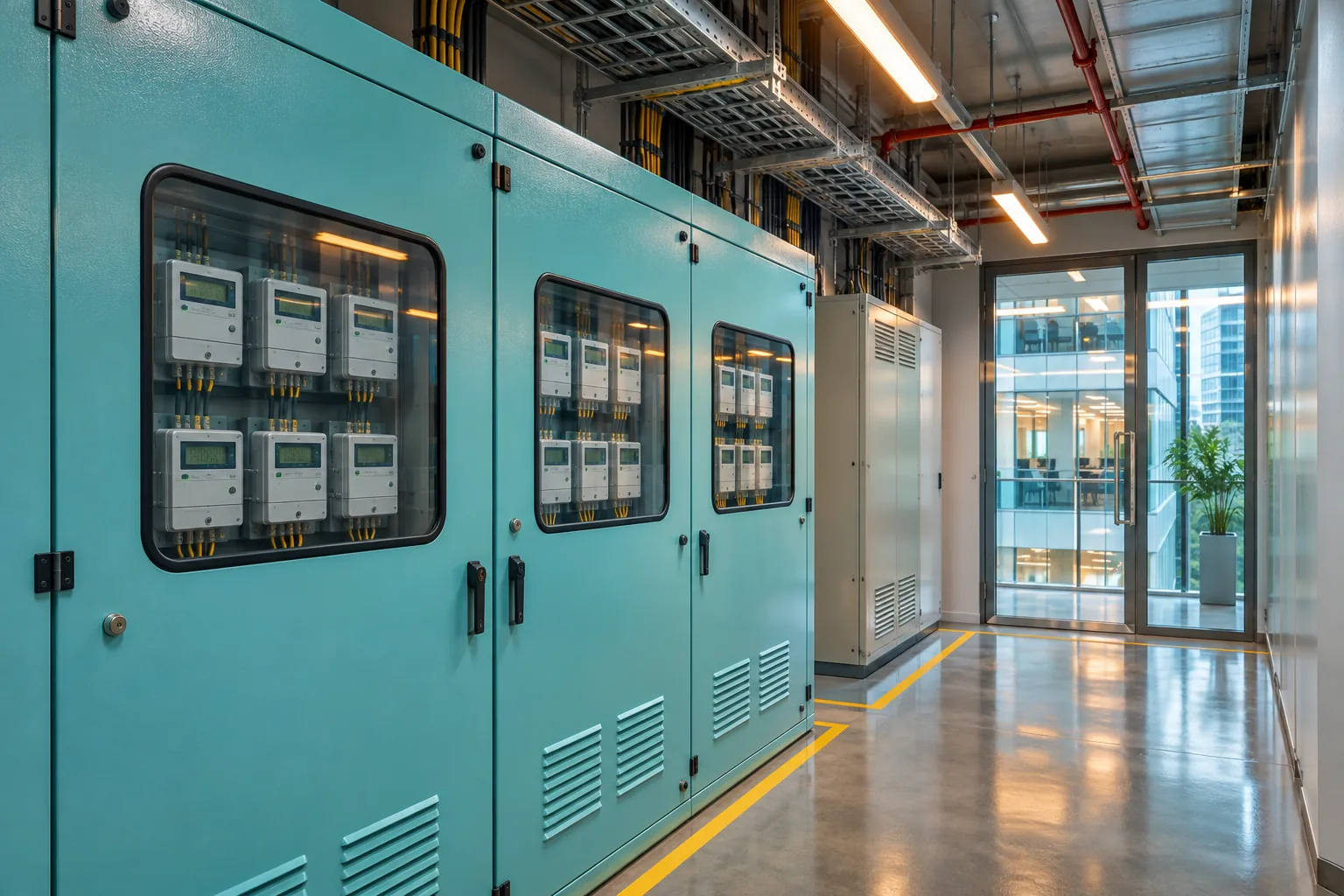
The sum of tenant readings often covers a smaller boundary than the building incomer. Common lighting, lifts, cooling plant and unmetered distribution can all sit between the two totals. Reconciliation starts by drawing that boundary and agreeing which loads the calculation is intended to explain.
Which meters belong in the total?
Draw the incomer as the parent and identify its immediate downstream branches. Where a floor meter already includes individual tenant meters, choose a single level for the comparison. Adding both the floor and its tenants would count the same electricity twice.
Use changes in cumulative kWh registers over identical opening and closing times. Align time zones and confirm that each reading covers the full period. Record replacements, resets and any manually transcribed values. A midnight site reading and a midday tenant reading may bracket different occupancy patterns.
How do you interpret the residual?
In this example, the tenant and common services branches explain 47,000 kWh of the 50,000 kWh imported. The remaining 6% is a starting point for an investigation. Its size alone cannot establish a meter fault or justify charging a tenant.
| Reading | Energy |
|---|---|
| Building import | 50,000 kWh |
| Tenant branches | 32,000 kWh |
| Common services | 15,000 kWh |
| Unexplained difference | 3,000 kWh |
Look for a shared plant board or a recent tenancy change missing from the schedule. A negative residual is also informative. Overlapping parent and child meters, a multiplier applied twice or mismatched dates can all push the branch sum above the incomer.
What should property management retain?
Keep one dated schedule with the parent meter, tenant or common service, register unit, multiplier and read dates. Attach an explanation to each estimate so that a future tenant change can be traced. If the figures feed invoices, the property team should confirm the applicable billing arrangements separately from this engineering check.