
Published
Why do air compressors draw power between shifts?
Compare compressor power with pressure, flow and production activity during idle periods. The combination helps separate legitimate demand from losses.
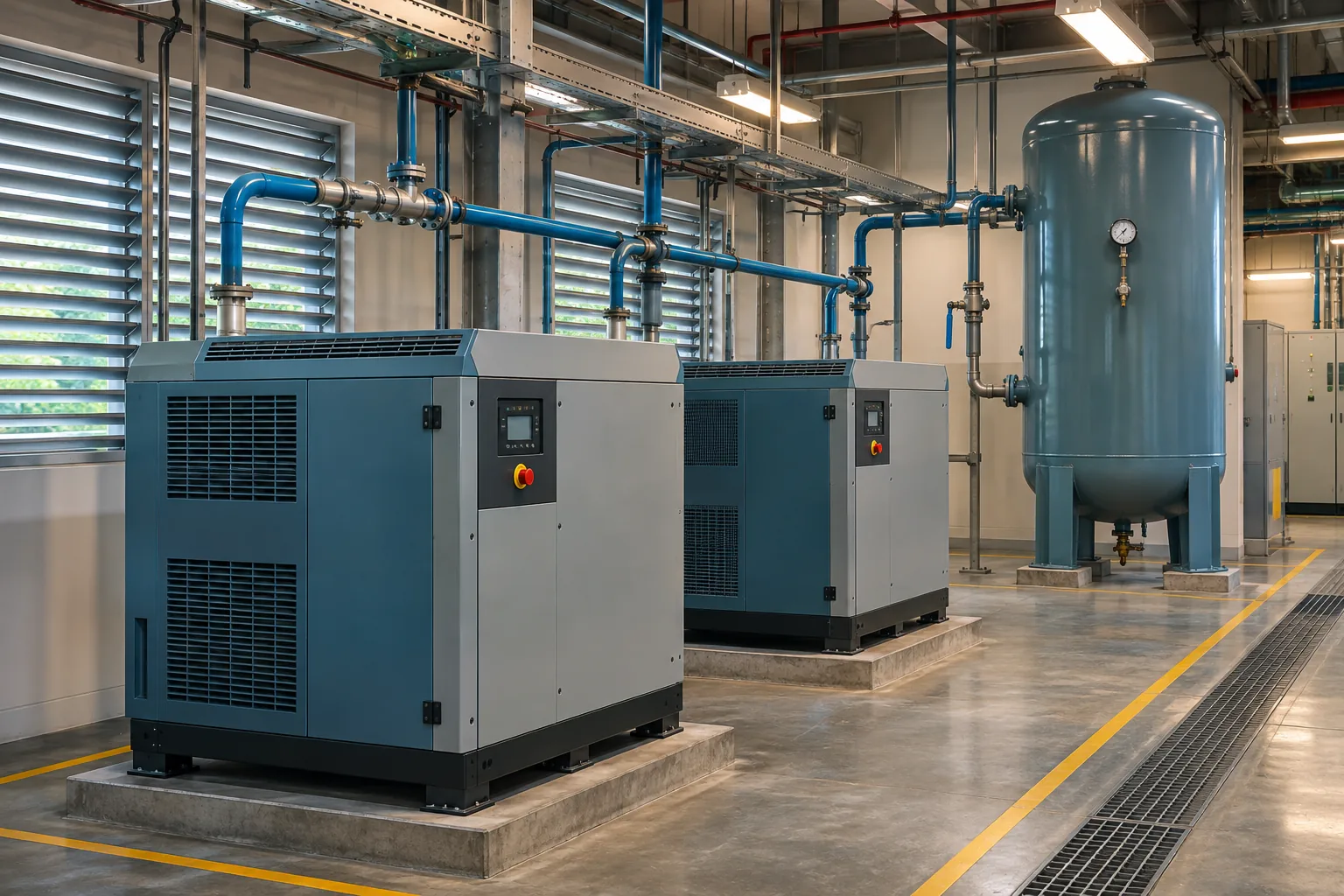
When production stops at 10 pm, the compressor room may keep working. Some users still need air for cleaning, controls or a second line. An unloaded compressor can also consume electricity while delivering little air. A feeder trend is a good starting point for deciding where to look.
What should you compare during an idle period?
Select a period when the production log identifies the lines that were running. Gather the compressor feeder’s interval energy, the controller’s loaded and unloaded states, header pressure and measured flow where available. Check whether the meter also covers a dryer or another compressor before attributing the entire reading to one machine.
State the duration of the interval. If the meter records 12 kWh in half an hour, the interval average is 24 kW. That figure describes electrical demand. It does not measure an air leak rate or tell you where air was used.
Which patterns help narrow the investigation?
Repeated loading while the header pressure cycles is a reason to examine downstream consumption. Compare the timing with cleaning and maintenance records. A steady electrical load with low delivered flow suggests a different question about unloaded operation or which equipment sits inside the metering boundary.
Ask the plant team to identify approved continuous users and compare similar nonproduction periods. Where an unexplained air demand remains, the maintenance team can use its leak survey and repair records to investigate specific locations.
How can you check whether a change helped?
Repeat the comparison after the recorded repair or scheduling change. Match the measurement period, pressure setting, active production lines and compressor configuration as closely as possible. Keep the before and after kWh, duration and operating notes together. That record lets the next shift understand both the observed change and the conditions under which it occurred.