
Published
How to explain chiller electricity use after hours
Align plant kWh with BMS run status, cooling demand and occupancy. Measure the equipment included in the plant total before comparing two nights.
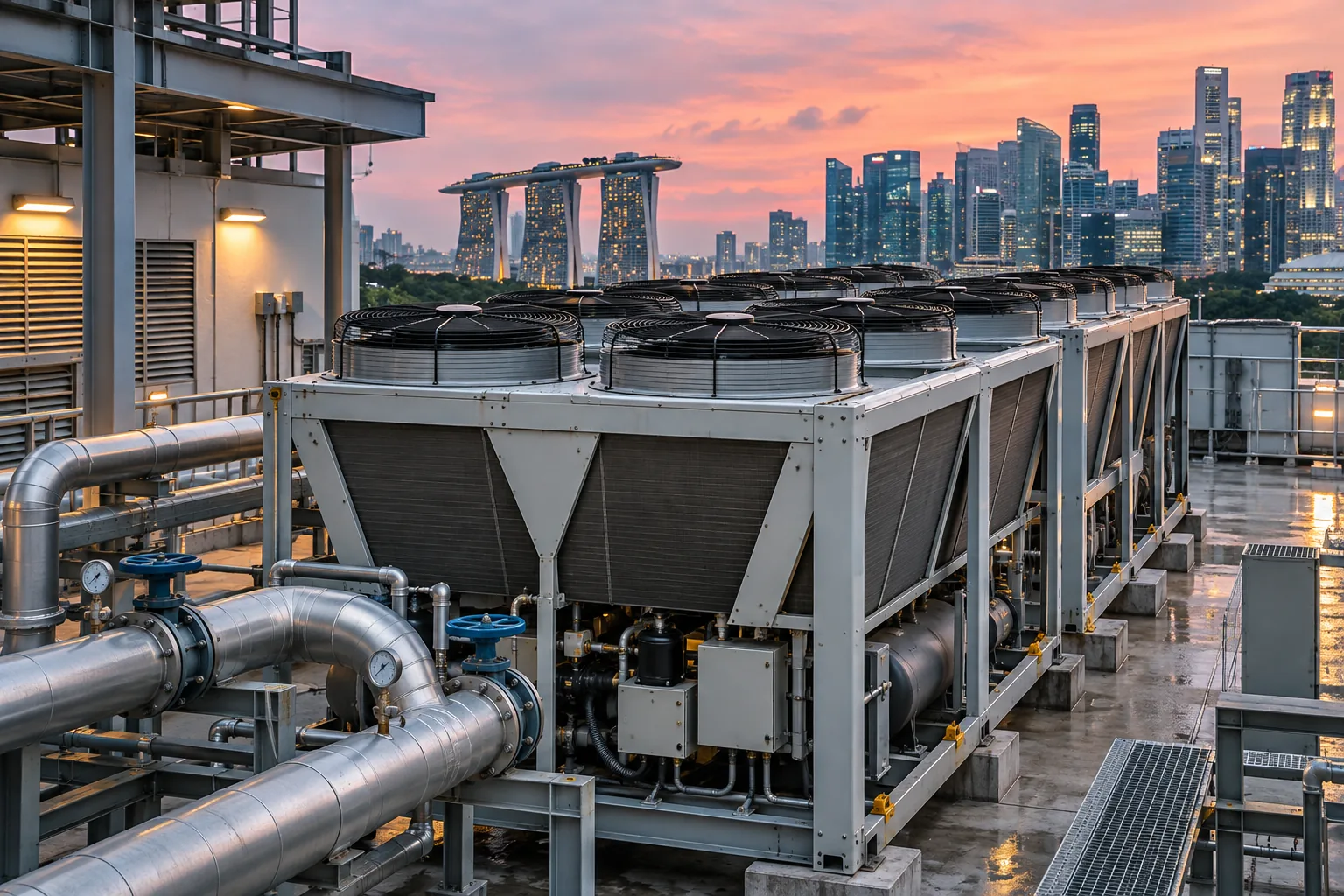
An evening peak on the building meter can come from a tenant event, a running pump or cooling equipment serving a round-the-clock room. Start at the plant feeder and use the building management system (BMS) to identify which equipment was actually running during the peak.
Where does the plant measurement start and finish?
Mark the chiller, associated pumps and, for a water cooled system, cooling towers on the electrical diagram. Check which of those loads the selected meter includes. A chiller-only reading and a whole-plant reading answer different questions even when their trend shapes look similar.
Use actual run feedback alongside scheduled start and stop times. A schedule records what the controller was asked to do. Feedback and electrical demand help determine what operated. Align the BMS and meter clocks before interpreting short periods immediately after shutdown.
What can two nights of readings tell you?
In this example, the same plant feeder averages less power on Tuesday but runs for twice as long. Tuesday therefore uses 60 kWh more electricity. Check the occupancy booking, override history and zones requesting cooling before interpreting the increase.
| Measure | Monday | Tuesday |
|---|---|---|
| Average demand | 80 kW | 50 kW |
| Run time | 3 hours | 6 hours |
| Energy used | 240 kWh | 300 kWh |
Electrical kWh alone cannot establish cooling efficiency. That calculation also needs the cooling delivered over the same period and a consistent equipment boundary. Singapore’s Building and Construction Authority publishes examples of the measurements used for a chilled water plant assessment.
What is a useful handover to the BMS team?
Give the operator the feeder name, meter interval, affected plant, run feedback and the time of the unexplained demand. Ask for the corresponding schedule exceptions and cooling requests. With those records the team can investigate the original evening instead of trying to recreate the event several weeks later.